
 It is sad to watch people whose hearing in declining and who won’t do anything about it. When with friends you can see them sitting without joining in on the conversation. They can’t hear others but they are unwilling to get hearing aids. Unfortunately, I can see this in my group of friends. I am not sure why hearing aids are an anathema to them. They don’t realize that not hearing well isolates them from others.
I know that the cost of hearing aids has been a factor but recently tech companies have realized that the cost was being controlled by those in the business. Technology has grown to the point that it is possible to create decent hearing aids that work for most people. Before the cost was exorbitant but now it is possible to get help for a reasonable price.
 The most recent studies have shown that not hearing well leads to a decline in mental acuity, withdrawal from social activities, and a decline in overall health. I still don’t understand why some seem to find using this simple tool as unimaginable. I don’t know what would be the trigger to undo this thinking but I wish I knew what it is. Discussing the impact with them (as a nurse) doesn’t seem to get through.
Why this kind of thinking?
What can be done?
Any ideas?
 Today has been an interesting day. The plans for our trip are changing daily. I may stay home part of the time. Family may stay here. We will just take one day at a time.
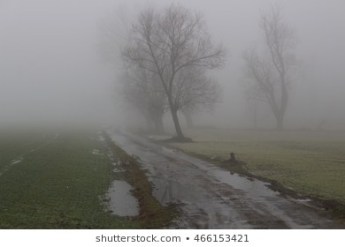 We are now in the season of Advent. Advent arrives in the darkest time of the year. Where I live it has been gloomy for the last week. We have had cold and rain. The sky is gray, the trees are gray…it feels as if the world is gray. The weather at this time of the year can be really depressing.
 However, this can be a difficult time for some. Think about those for whom this time of year is hard. For the homeless it is just cold and miserable. We see them huddled on the streets and in cardboard boxes cringing away from the cold. Those who have lost loved ones during this season struggle with their loss. There are so many memories. People who are without family or friends see the season highlighting their loneliness.



 As the disease progresses management at home can become impossible. Frequently the patient has something called “sundowners.” This means that they are alert when everyone else needs to sleep. A friend of mine’s mother climbed out a window in the middle of the night to “go home.” How can the average family cope with someone who could leave the stove on starting a fire or turns on the bathtub faucet flooding the house? Caregivers are stressed and exhausted.
 One of the most important things to accept and understand is that each of us is loved. I am not talking about the love of another person but the love that surrounds us. For me, there is a love that pervades the universe. We learn to accept that each of us is unique and as such never to be again. Our time on earth is a gift. We have to make choices about how we use that gift. We didn’t seek that gift. It was given freely and without expectation of some sort of return.
 To me this feeling of being left out, ostracized and without meaning is insidious and can trap us in depression. Sometimes it is hard to believe that love surrounds us. You can see it as God, or whatever form you accept but it is there.
 On my route to town I pass a colony of homeless people who have set up a camp underneath an overpass. There are tents there and open areas to congregate. There are trees and a forest-like setting. Basically they have formed a community. They have been there for a good while and are law abiding. The police don’t bother them and have actually helped at times. A porta-potty company has put and potty there which they empty at their own expense. An Episcopal priest has formed a church for them and most attend.

 Change is inevitable. We need to know where our roots are held fast and then we can move with the change. We may find that grounding in God, in a person, or in a community. Where is not important. Find your ground.

 worry-less-journey