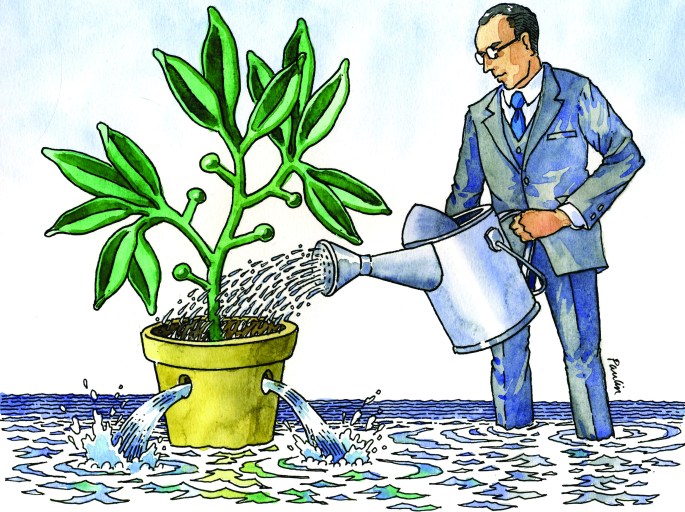
Don’t wall yourself in

When I look back over my life I wonder what things I have not done because of thinking I couldn’t. I grew up caring greatly what other people thought. I don’t like conflict and would back away from things to avoid it. I always wanted peace and was the mediator in my family. I was afraid to make waves.

a

The funny thing is that in some ways I was an independent thinker. In my teen years everyone smoked. I didn’t. I took a stand about getting drunk ( although I would take a drink.) I never took drugs. I didn’t like feeling out of control.

However, those were things I did for myself. I never confronted others about their ideas. I just faded into the background. I was an only child and had trouble relating to those my own age. My primary experience was with adults. I found good friends in high school and in college where I finally felt I belonged.

I was not one to take risks. There are some risks I regret not facing. I always wanted to learn to paint but never tried since I assumed I couldn’t be best at it. My father encouraged me to try things and I never really stepped out of my comfort zone until I was married.
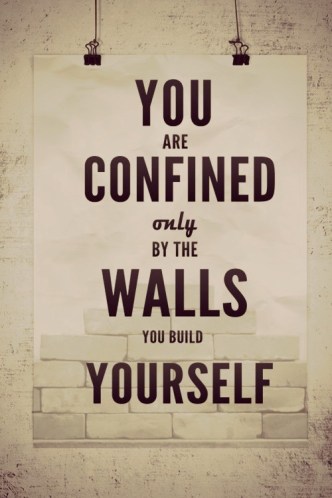
only you

Now I will try anything. (maybe not skydiving..I watched my husband jump with the military for years although  I have been on some planes I would rather have jumped out of.) I am not afraid to speak my mind and disagree when I want. I don’t care as much about the opinion of others and am unafraid to rock the boat. I still don’t like conflict but am unafraid to speak up rather than hide.

I am sorry it took me so many years to get to this point. Each of us is the only person who can hold us back. I am loving who I am now and having a great time exploring anything I want. Don’t wait to try things. There is no disgrace in failing. That’s how we learn.
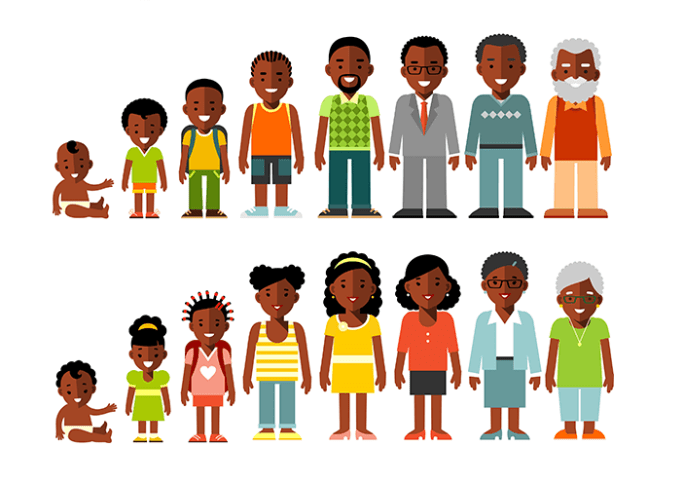
Life has stages

Western society is a “first-half-of-life” culture, largely concerned about surviving successfully. Richard Rohr

Some of the Eastern cultures understand that life has stages. The Hindus see a learning/student stage, a family/work stage, a retirement/spiritual exploration stage and an enlightenment stage.

This kind of thinking is also present in Buddhism and other cultures. We seem to get stuck in the beginning stages and have no understanding of how we need to live the “second half of life.”

LI-at-various-life-stages-jonah-sept-2016-v2

In the first half of our life we are learning and absorbing things. It is as if we are creating a receptacle in which to live. The second part of life should be about putting things in the receptacle. This means understanding the world around us from a deeper perspective. Filling ourselves up with the meaning of life and understanding what is important. This leads to a deep fulfillment and sense of purpose.

findingmeaning_mailer_facebook

Experience the first part of life with everything you have. Learn, grow, love but don’t skip the next part which will bring you to a place of peace.

Soul work

What is is to search for our own soul. (It doesn’t matter what you call it. It is our inner core…our best self.) How do we turn away from the things that our society has led us to believe are the ultimate good? When are we able to grow enough to cast aside the ideas that we have been taught from birth?

societal-expectations.jpg

Most of us who have spent our lives in western society have been taught to reach for things that are finite. We look to find joy and peace in things that fade. We want everything taken care of NOW! We are impatient and want pills to cure our ills that work fast. If we feel the slightest bit bored we want entertainment that distracts us from spending time with ourselves. We want to be as beautiful at 80 as we were at 25. The look of youth is the ultimate. We want things to feed our emptiness with…cars, jewelry, clothes, electronics, houses….anything to make us important. We want to seem important, looked up to and emulated. We think that these will be fulfilling. They won’t. Their rewards to us are ephemeral.

ephemeral

Turning away from these illusions and seeking the soul itself is a challenge. Can we go against society and understand that love and compassion and empathy and generosity are what matters? These are eternal.

mind-body-soul

Seek inside yourself for the things that really matter and pursue them.

The good

If I think I have serious problems all I have to do is to look around me. I know that all of us have problems but there sure are some I wouldn’t want to have. One friend has a child with a brain tumor, another friend has had 2 recurrent brain tumors, I can look around me and there are people in pain with things unimaginable.

the good

I need to remember to be grateful. Maybe I need to start saying: thank you that I don’t have a brain tumor, thank you that my children, grandchildren and great grandchild are well. Thank you that I am not in a wheel chair. Thank you that I have a home to live in. Thank you that I have food to eat.

I could spend the rest of the day listing the things that are a gift. I don’t need to be saying “poor me” and feeling bad.

Focusing on the good things makes life a lot more joyous. Gratitude helps us. Sometimes we are sad that some of our own problems are difficult and it is ok to understand that but it is not ok to dwell on it. It doesn’t help.

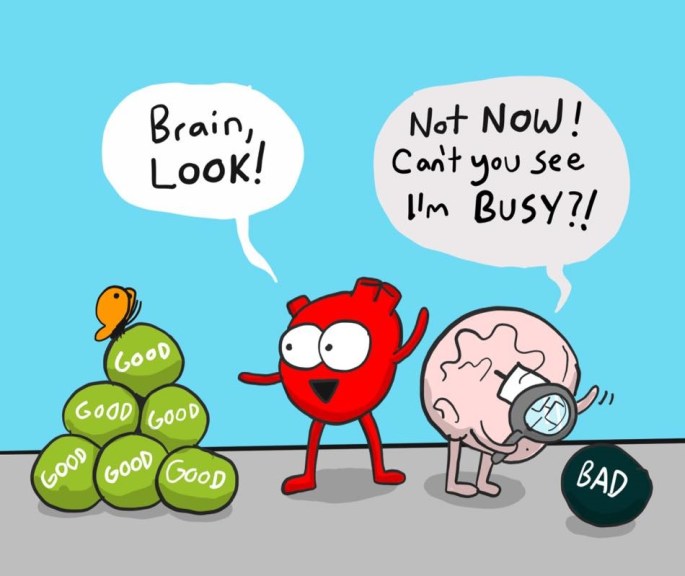
good instead of bad

Find some way to keep track of the good things and focus on them.

We are connected to the earth

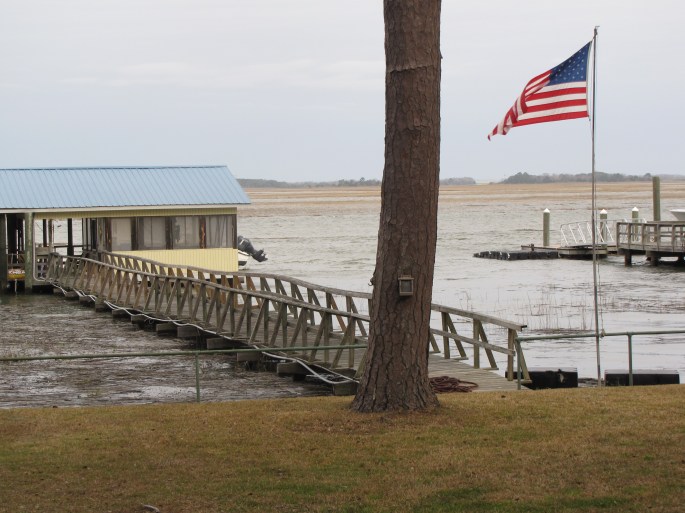
In coastal Georgia, where I live, we have 7-8 ft tides. There is nowhere else along the southern coast where there is such a fluctuation. It is because of the westward dip in the coast. Today we had extremely high tides. I have not heard how high but such tides cause some coastal flooding on roads that are extremely low. It is not unusual for this to happen on a full moon and at this time of the year.

high tide

When the tide is so high that we can only see a little marsh grass peeking out across Turner’s Creek we know it is well above normal.

Tide has an ebb and flow. It is related to motion of the earth. As human beings we also have an ebb and flow. The fluids within the cells in our bodies actually respond to the cycles of the moon and the motion of the tides.

Years ago my youngest daughter wrote a paper about the moon, tides and the increase/decrease of episodes of crisis in those with mental illness. She studied the admissions to psychiatric units and correlated it with moon and tide phases. it was a small study and not really enough to prove the relationship but there was an increase in admissions related to certain moon phases.

Nurses have forever said that hospital admissions, births and accidents have that same relationship although statistically it never shows up that way. As a neonatal nurse we usually saw more babies with problems at a full moon.

forewarned

I do wonder if we kept track of the times we ourselves have difficulty with mental health flare ups we would see some correlation. It would be interesting to know. It would help us to better understand the cycles of crisis and plan to be ahead of the curve.


We are a whole not parts

It has been two weeks since I was so sick with IBSD. I have been so well in general that the episode completely blind-sided me. Now I am experiencing the hangover. Since these particular episodes always occur between 9 and 10 in the evening I get anxious each night around that time.

The irony is that this kind of episode only crops up, at the most, once a year. It will take weeks for it to fade from my mind and then I will be fine.

journey-to-wholeness

It is so amazing what we can do to ourselves. I am fine physically but my mind clings to the latest event. So what to do? I have increased my prayer and quiet time, continued my regular routine and let that event become a memory that will fade. Learning and using coping skills is such a critical piece to our health and wholeness. We must remember that we were created as whole beings….not separate parts. Everything that we do affects our entire being.

One of the problems with out medical systems today is that we are not see this way but as different parts managed by different physicians. Not only do they not see beyond their specialty but they seldom communicate with each other.

wholeness2


We must learn to be our own advocates. Even if a physician ignores or puts you down for your concerns and conclusions about your care remember who sees the end result. Don’t ever be afraid to speak your mind and if you have someone who can’t accept that change to someone else. Never let a caregiver dismiss you. Each of us is just a important as the person caring for us. Never forget it.

The ordinary

Yesterday I had an off day. I was sick the night before with a major bout of IBSD. Details carry TMI. Yesterday I was wiped out and just wanted to crash. While I was resting I heard a comment: “When your mind has been shattered you look for simple everyday things to do.” This is a paraphrase of what was said and I have no memory of who said it. (sorry)

ordinary things

It really hit home. Being overwhelmed shoves us into a mindless mode where thinking is impossible. When we can’t even think we turn to the ordinary. Just following a daily pattern allows us to put aside the problem for a moment. Simple tasks like bed making and loading the dishwasher seem comfortable and bring some respite. It keeps us in “the ordinary” and that is what we need to move forward.

petting

Sometimes mindless tasks are the only thing we can do. It reminds us of the simple world outside of our shattered reality. The ordinary can be soothing and kind. There are many times that ordinary is my solace.


Think too much!

Today I saw the new Mary Poppins movie and enjoyed it very much. I read the book as a child (in the deep dark past) and always loved the story. I adored the original film but found this one deeper and more profound. I know that I will watch it again in the future.

I am often caught by phrases spoken in films and in this film it was said “some people think too much.” I suspect that any of us who worry and obsess and have anxiety do this. We think too much.

dont-think-too-much-you-will-create-a-problem-that-wasnt-even-there-quote-1

Thinking too much is definitely what we do when we worry. We lay out every scenario that can possibly take place. I explain to myself that if I encounter one of my scenarios I will be ready to face it. Usually I don’t face any of the things I envision and if I did I would probably not be prepared at all.

This obsessing is a venture into futility. It is a total waste of time, energy and, last but not least, an exercise in chaotic thinking. It leaves me anxious and exhausted.

It has been said that people who do this are smarter than the average. I don’t know if this is true but there are studies with that information. The reason given is that they can come up with more outcomes for any scenario.

A Mixed Blessing

If it is true that anxious people are smarter than the average then it is a mixed blessing. I might want to give it up for some peace.